The History of Atlantic City Casinos
Atlantic City’s casino industry is one of the most fascinating stories in American gaming history. What began as a political gamble to revive a struggling seaside resort turned into a multi-billion dollar industry that reshaped New Jersey’s economy, the city’s identity, and the future of legalized gambling in the United States.
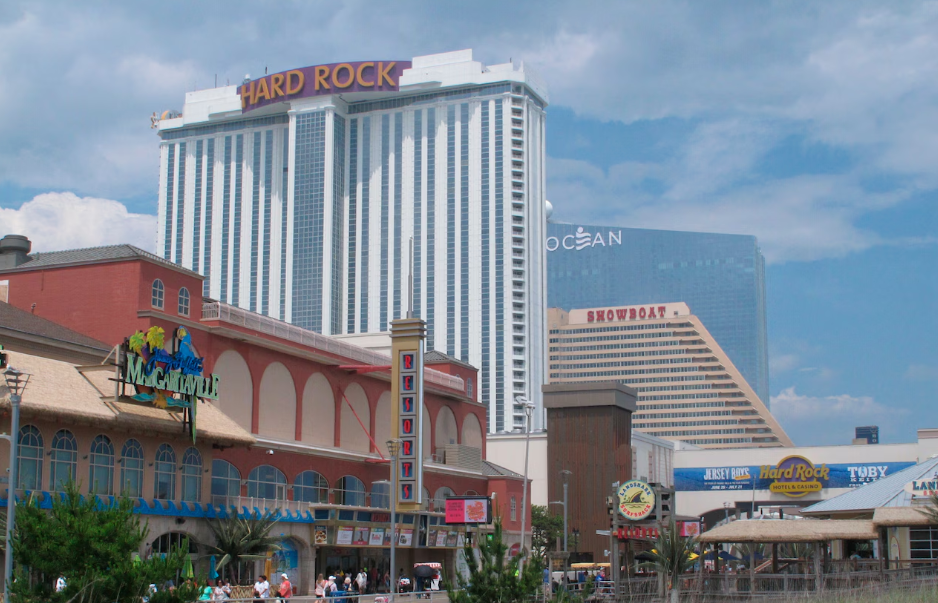
Atlantic City’s casino skyline along the Boardwalk helped transform the city into the East Coast’s premier gambling destination.
Atlantic City Casino Quick Facts
- 📅 Legalized: 1976 (Atlantic City only)
- 🎰 First Casino: Resorts International (1978)
- 💰 Peak Revenue: $5.2 billion (2006)
- 📉 Major Closures: 2014–2016
- 🌐 Online Gambling Legalized: 2013
Complete Atlantic City Casino Timeline
- 1978: Resorts International
- 1979: Caesars Atlantic City
- 1979: Bally’s Atlantic City
- 1980: Harrah’s Atlantic City
- 1980: Sands Hotel & Casino
- 1980: Golden Nugget (original Boston Ave)
- 1981: Tropicana Atlantic City
- 1981: Playboy Hotel & Casino (later Atlantis)
- 1984: Trump Plaza
- 1985: Trump Castle (later Trump Marina → Golden Nugget)
- 1987: Showboat Casino Hotel
- 1990: Trump Taj Mahal (now Hard Rock)
- 2003: Borgata Hotel Casino & Spa
- 2012: Revel (now Ocean Casino Resort)
- 2018: Hard Rock Hotel & Casino (reopened)
- 2018: Ocean Casino Resort (reopened)
Atlantic City Casinos Today
- Resorts Casino Hotel
- Caesars Atlantic City
- Bally’s Atlantic City
- Harrah’s Atlantic City
- Tropicana Atlantic City
- Golden Nugget Atlantic City
- Borgata Hotel Casino & Spa
- Hard Rock Hotel & Casino
- Ocean Casino Resort
The Legalization of Casino Gambling
Casino gambling in New Jersey was not an immediate success. In 1974, voters rejected a statewide referendum by a wide margin, with nearly 60% voting against legalization.
Two years later, in 1976, a revised proposal limited casino gambling exclusively to Atlantic City. This version passed, framed as a targeted effort to revive a declining resort city rather than expand gambling statewide.
Governor Brendan Byrne signed the Casino Control Act into law on June 2, 1977, establishing one of the strictest regulatory frameworks in the country. This included the creation of the Casino Control Commission (CCC) and the Division of Gaming Enforcement (DGE), setting the tone for modern gambling regulation nationwide.
The First Atlantic City Casino
Atlantic City officially entered the casino era on May 26, 1978, when Resorts International opened its doors on the Boardwalk. The launch drew massive crowds, with visitors waiting hours just to get inside.
At the time, Atlantic City was the only place on the East Coast where casino gambling was legal, giving it an immediate advantage and positioning the city as the premier gambling destination outside of Las Vegas.
Explore the Atlantic City Boardwalk →The Casino Boom Years
The late 1970s and early 1980s saw rapid expansion, as new casinos opened and Atlantic City quickly transformed into a full-scale gambling destination.
- 1979: Caesars Atlantic City and Bally’s open
- 1980: Harrah’s enters the market
- 1981: Tropicana opens on the Boardwalk
- 1985: Golden Nugget expands the Marina District
During this time, Atlantic City became known as the East Coast’s casino capital, drawing millions of visitors each year and creating tens of thousands of jobs.
Economic Impact and Growth
Casino gambling brought significant economic benefits to New Jersey and Atlantic City. At its height, the industry employed more than 34,000 workers and generated billions in annual revenue.
Casino taxes and reinvestment programs helped fund public services for seniors and disabled residents, while the Casino Reinvestment Development Authority (CRDA) directed billions of dollars into infrastructure, housing, and development projects across the state.
Peak Years and Market Dominance
Atlantic City reached its peak in 2006, generating $5.2 billion in gross gaming revenue. At the time, it stood as one of the most successful casino markets in the world.
Luxury resorts like Borgata, which opened in 2003, helped modernize the city’s image and introduced a new level of upscale gaming, dining, and entertainment.
Decline and Casino Closures
Beginning in 2007, Atlantic City faced increasing competition from neighboring states like Pennsylvania and New York, which introduced their own casinos and reduced the city’s regional advantage.
Between 2014 and 2016, five major casinos closed, including Revel, Showboat, and Trump Plaza, marking one of the most difficult periods in the city’s history.
Despite these challenges, the remaining casinos adapted and repositioned themselves for long-term survival.
The Modern Casino Era
Atlantic City began its recovery in the late 2010s with the reopening of major properties like Hard Rock Hotel & Casino and Ocean Casino Resort in 2018.
The introduction of online gambling in 2013 and sports betting in 2018 fundamentally changed the industry, allowing casinos to expand beyond physical locations and reach customers throughout New Jersey.
Today, Atlantic City operates as a hybrid gambling market, combining traditional casino experiences with digital gaming platforms.
Atlantic City Casinos Today
Today, Atlantic City remains one of the most recognizable gambling destinations in the United States. While the industry has evolved, the city continues to attract visitors with its combination of casinos, beaches, entertainment, and historic Boardwalk atmosphere.
The modern Atlantic City casino industry is no longer defined by exclusivity, but by adaptability — a city that has continuously reinvented itself to stay relevant in a changing gaming landscape.
Explore Things to Do in Atlantic City →